



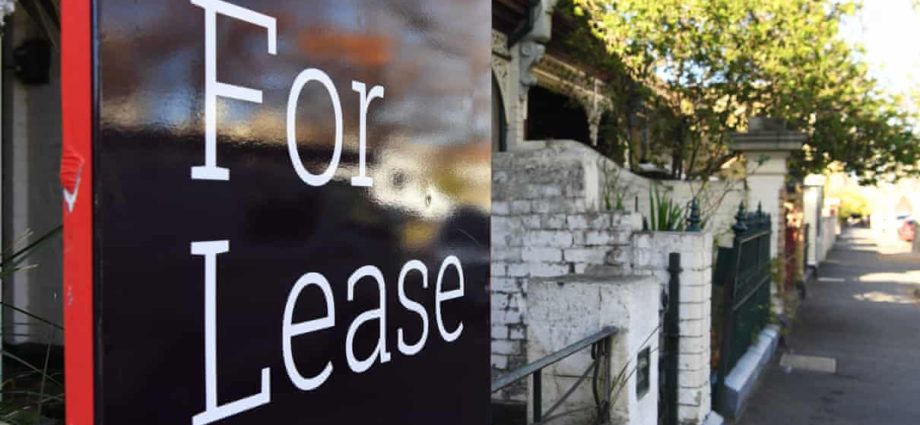
PHOTO: For lease. FILE
Bed bugs, mouldy bathrooms, leaking roofs – younger generations in Australia are having an awful time and it is only going to get worse.
When economics student Ella Cutts moved from her hometown of Byron Bay to Melbourne with her partner a year ago, her biggest hurdle was not her studies but finding a place to live.
In the end, she settled on a “shoebox” in Preston, 9km outside of Melbourne.
“It was the only one we could afford,” Ms Cutts, now 20, admitted.

The place was a bit of a “mess” but the real estate agent insisted it would be cleared up.
It wasn’t.
When they arrived, strewn empty wine bottles greeted them, the bathroom was mouldy and the place was, bordering on filthy. It would take months of painful negotiations for some type of resolution.
The real shock would come the next year, when two weeks before renewing the lease, Ms Cutts was told “changing economic conditions” would result in a $70 dollar increase for the apartment.
“It’s tiny,” she told news.com.au exasperated. “And we just can’t afford it. It’s been really stressful.”
Already working, studying full-time and receiving the maximum government assistance she can claim to make ends meet, she’s now looking elsewhere.
@chantelleschmidt Replying to @mrssharmaa So sorry for all the complaining!!! Forgive me!!! #fortnight #rental #rentalcrisisaustralia #rentalproperty #rentals #sydneyrentalcrisis #sydneyrentalmarket #housingcrisis #housingcrisisaustralia
What happened to Ms Cutts is not unique. In fact, it’s happening across the country.
A toxic mix of rising interest rates, increasing mortgage repayments for owners and an undersupply of housing leading to exorbitant rental prices.
Nobody is immune from it. But it is younger generations – with a lack of disposables of income and a shaky footing in the job market – that appear to be disproportionately impacted.
Layla Pope, a tenant advocate in Sydney’s eastern suburbs said the scale of the problem was “truly horrifying”.“We are talking about rent increases in some cases of $500-$600 dollars extra, there is no cap” she said.
“Renting is now a luxurious commodity. We are not talking about waterfront properties, we are talking about two-bedroom, mould-ridden flats with leaky ceilings that are now unattainable.”

Layla Pope advises people on the Sydney rental market. Picture: Supplied

Yeganeh Soltanpour says international students struggle to find places to live.
But it’s those young people operating outside the system that she holds the gravest fears for.
“There is a whole section of our population whose housing is based on a Facebook post or a Gumtree ad,” she said. “Some are in legitimate unsafe housing because they can only afford to rent a room, a part of a room, so they take a gamble on a stranger online.
“There is already a huge power imbalance for a private tenant trying to negotiate with a real estate agent and this imbalance is compounded where the person you’re trying to negotiate with is someone you share a living room with.
“Due to the lack of protection and regulation in share houses, we get lots of calls where someone comes home from work locked out of their house, belongings thrown on the street, bonds never returned and then gets blocked on whatever social media platform they were using to communicate with, limiting any ability to remedy the situation.”
How does she sum it? “It just really sucks,” Ms Pope says.
“We have to tell people that what is happening to them is completely legal under the current rental system. We legitimise their worst fears.”
@chantelleschmidt Please, humour me more about the market. #rentnegotiation #tribunal #rentalcrisis #sydneyrentalcrisis #rentalproperty #housingcrisis
House crawling in bed bugs
If there is a group of young people that is particularly vulnerable to this phenomenon, it might be international students
Yeganeh Soltanpour, the president of the International Students Council, said many don’t have the language, connections or know-how of Australia to survive in a highly competitive rental market.
“If you grew up here you might know where the cheaper house is, the different websites and services to locate it, whether it is messaging a friend or having a connection,” she said.
“I often hear domestic students say ‘My mum’s friend had a spare room, or ‘one of our friends had a vacant room’.”
She bristles at portrayals of international students in the media as “cashed up individuals who come here to take homes and jobs”.
Says Soltanpour: “It couldn’t be furthest from the truth.”
Most are from middle class homes. Most have parents who have sacrificed enormously financially to send them to Australia. Most have a level of guilt associated with that sacrifice. And she says most struggle profoundly – like she did – when they arrive.
Lakemba rental ‘worse than third world’
Take Rafiul Hossain, an engineering student at Macquarie University.
Despite successfully evading aggressive rental scammers before he arrived, he ended up in “barely liveable” place in Lakemba, south west Sydney, which had a busted toilet, a broken door, and a bed crawling with bed bugs.
“I am from Bangladesh, and it is well known as a third-world country,” Mr Hossain says. “But the place I moved into was a thousand times worse than Bangladesh.”

Rafiul Hossain ended up in a ‘barely liveable’ rental in Lakemba. Picture: Facebook
In 2016, Bernard Salt in a column in The Australian famously linked the inability of many young Aussies to enter the housing market with their love of eating expensive smashed avocado breakfasts in trendy inner-city cafes.
Facetious or not, the simple truth remains that young Aussies have it far tougher than their parents when it comes to home ownership.
Home ownership unattainable without bank of Mum and Dad
Michael Fotheringham, the managing director of the Australian Housing and Urban Research Institute said part of the problem is that “house prices have rapidly increased much more than wages”.
“The system has generated intergenerational imbalances as older generations have much more wealth than younger generations ever will and because of these imbalances a growing number of young people have given up on owning their own home because it isn’t affordable.”
While boomers often cite the double digit interest rates in the 1990s they experienced, Mr Fotheringham says that isn’t a good comparison.
“House prices were enormously lower, the amount you need now just for a deposit would have bought you a nice house then,” he said.
“People are also renting for much longer – often for 10 years or more, and high rent prices prevent people from saving the enormous deposits needed to get a home loan.
“We have a real supply shortage in our housing system and we have had a relative shortage for a number of years.
“But some of the knock on effects of Covid have really disrupted supply chains and workforce development so we are unable to keep up with the demand, not even close.”
Mr Fotheringham said all levels of governments, industry and community sectors needed to work together, and look beyond short-term fixes.
“It’s nation building,” he said simply.
Johnathon Abel, 29, a Sydney father-of-three, says if anything he feels “cheated” by the system. He pours 65 per cent of his income as a teacher into renting a three bedroom duplex in Padstow.
“You do all the right things, go to uni, work hard at a good job and try and build a family, then despite all the work you do, all your money gets sunk into someone’s property portfolio with no way to escape it,” he lamented.
But, he says he and his wife Chloe have made peace with the fact they will never probably own their own home, a fear shared by around 75 per cent of young Australians according to the latest research.
READ MORE VIA NEWS.COM.AU