





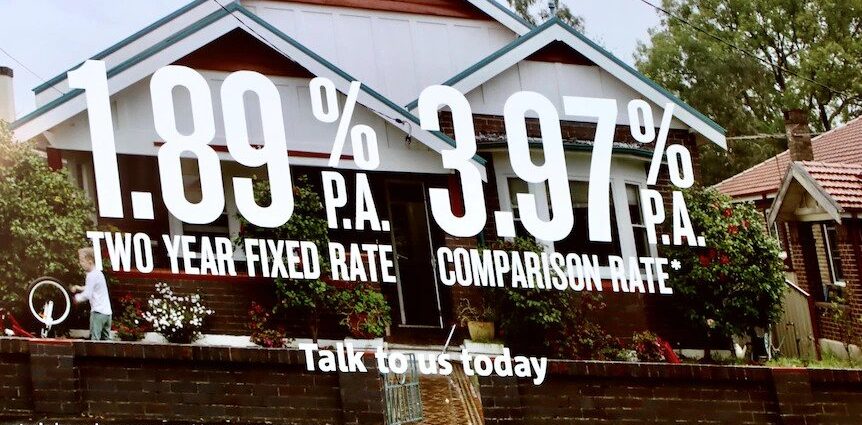
PHOTO: Three-year plus fixed mortgage rates have been lifted by 17 lenders this month, while none has cut them.(ABC News: John Gunn)
One word kept interest rates near zero across the developed world last year, but it’s disappearing faster than the value of an out-of-favour meme stock.

That word was “transitory”. According to the Macquarie Dictionary it means “lasting for a short time” — a definition that itself requires some defining.
The noun that adjective was attached to was inflation, the stated objective of most central bank policies.
While each inflation-targeting central bank has slightly different objectives, the typical target is around 2 per cent.
The Reserve Bank of Australia gives itself a bit more flexibility with a 2-3-per-cent target range.

Over the past year, inflation in many developed economies has started rising above the targeted levels, sometimes well above.

The world’s biggest economy, the US, is a prime example.
Its headline consumer price index (CPI) crept above 2 per cent in March, jumped above 4 in April and hit 5 in May.
That’s where the term “transitory” became popular.
It first appeared in US central bank statements in April, and kept reappearing thereafter.
The Federal Reserve was operating on the belief that supply chain disruptions and the resulting shortage of goods were largely to blame for rising prices, which would ease off just as quickly when those bottlenecks ended.
A 37 per cent jump in the price of used cars as new car production was stalled due to COVID-related computer chip delays is a case in point.
However, after some stabilisation over the northern summer, the accelerating price increases didn’t stop.

The annual rise in the headline CPI passed 6 per cent in October and hit 7 per cent by the end of the year, its highest level since June 1982.
And rising prices are not just confined to manufactured goods with complex international supply chains.
The cost of a place to live rose 4.1 per cent, food prices jumped 6.3 per cent, clothing rose 5.8 and energy was the big one, rising 29.3 per cent, with fuel up by almost 50 per cent.
Meanwhile, the Fed’s preferred ‘core’ measure, which strips out food and energy, was still up 5.5 per cent, way above its target.
READ MORE VIA ABC
https://www.instagram.com/p/CYmf7dQB4JJ/?utm_source=ig_web_copy_link


