




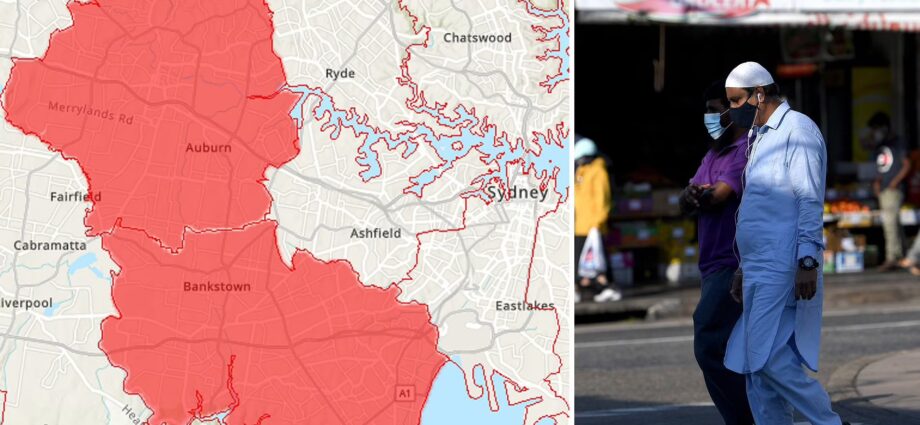
PHOTO: According to an analysis of Census data from 2016 to 2021 by CoreLogic, Sydney’s inner south-west, including areas like Bankstown and Lakemba, attracted the highest number of migrants. THE DAILY MAIL
Immigration to Australia has reached a historic high, leading to a significant influx of foreigners primarily into specific suburbs in Sydney and Melbourne. In the year leading up to March, a record 454,400 individuals moved to Australia on a net basis, accounting for arrivals minus departures. Among these migrants, who contributed to 81 percent of the overall population increase of 563,200 (including births), the country is accommodating an average of 1,543 new residents every day.
Former Real Estate Agent Engaged in ‘Wholesale’ Meth Scheme, Exchanging Drugs for Sex
According to an analysis of Census data from 2016 to 2021 by CoreLogic, Sydney‘s inner south-west, including areas like Bankstown and Lakemba, attracted the highest number of migrants. Parramatta also saw a substantial increase in migrant population. In Melbourne, the south-eastern suburbs encompassing Dandenong and Pakenham, as well as inner-city areas like Brunswick and Docklands, also reported a higher proportion of new migrants settling in.
This surge in immigration has coincided with a sharp increase in apartment rents, with capital city unit rents surging by 14.9 percent in the year leading up to August, reaching a peak annual growth rate of 16.5 percent in May. The substantial rise in permanent and long-term overseas arrivals, largely due to more international students and skilled migrants since Australia’s borders reopened in December 2021, has led to this housing pressure.
CoreLogic economist Kaytlin Ezzy noted that the impact of this immigration surge is particularly affecting existing renters since many recent long-term migrant arrivals initially rent before considering home ownership. She expects unit rents to continue rising steeply as more overseas migrants arrive. Although rental affordability has slightly improved in recent months, unit rents are expected to remain high, especially with ongoing strong net overseas migration projected through 2023 and 2024.

A CoreLogic analysis of Census data from 2016 and 2021 showed Sydney’s inner south-west, covering Bankstown and Lakemba, took in the most migrants, along with Parramatta, based on Australian Bureau of Statistics mapping areas

Melbourne’s south-east, covering Dandenong and Pakenham, and the city’s inner area, covering the city centre along with Brunswick and Docklands, were also housing a higher proportion of new migrants
The suburbs where most immigrants are settling include:
In Sydney:
- Bankstown
- Lakemba
- Parramatta
In Melbourne:
- Dandenong
- Pakenham
- Brunswick
- Docklands
CoreLogic’s data indicates that while units make up 25.9 percent of the national housing stock, this proportion rises to 30.4 percent in Australia’s capital cities, up from 22.9 percent in 2010. This suggests that Australia will increasingly rely on apartment-style housing to accommodate its growing population, particularly in metropolitan areas.
Possible interest rate cuts in 2024 could stimulate apartment price increases, which didn’t occur in 2021 despite record-low Reserve Bank interest rates that primarily affected house values. However, the high number of units currently under construction, along with high interest rates and low consumer sentiment, may initially temper unit demand and price growth. Still, once the construction pipeline is exhausted, a potential shortage of new unit supply combined with lower interest rates could drive a stronger price boom in the unit market.
Sydney’s median unit price is significantly higher than Melbourne’s, with Sydney at $822,145 and Melbourne at $603,642. However, certain areas within Sydney’s inner south-west, such as Lakemba, offer more affordable options with a median apartment price of $424,555, in contrast to Hornsby’s $686,346.
As of August, Australia’s national vacancy rate stood at just 1.2 percent, according to SQM Research data. This low vacancy rate has contributed to substantial rent increases, with Sydney’s median weekly apartment rent rising by 20.4 percent in a year to $666, while Melbourne’s equivalent costs increased by 17 percent to $527.
Notably, NSW Premier Chris Minns has suggested the construction of more apartment towers to address the housing crisis, emphasizing the need to build upward rather than outward. New apartment towers are indeed being constructed in Sydney’s western suburbs, although not in the affluent eastern suburbs close to the city.
In response to Nicky Williamson’s question about wealthy postcodes like Vaucluse and Mosman, it remains to be seen whether they will also contribute to the construction of more apartment towers to accommodate the growing population.
SOURCE: THE DAILY MAIL